The Human Quotient (HQ) is a unique, evidence based model that I developed for clients of Leading Minds Executive Coaching and for a leadership training company of which I am co-founder: Strategy of Mind, LLC.
The Formula: Proactive Over Reactive
At its core, the Human Quotient is a ratio: proactive divided by reactive. The higher your proactive numerator — the more you lead with intention, deliberate thought, and conscious choice — the higher your HQ. The goal is not to eliminate reactive responses entirely. Some situations genuinely call for quick action. But in years of coaching executives, physicians, attorneys, and entrepreneurs, I have found that most high-achievers are far more reactive than they need to be, and that reactivity carries a real cost in their leadership effectiveness and personal well-being.
What drew me to develop this framework — and what I continue to find compelling about it — is that unlike IQ, which is largely fixed, your Human Quotient is trainable. With focused coaching and genuine effort, the ratio shifts. Clients who came to me stuck in patterns they could identify but could not seem to break begin to lead, communicate, and make decisions in fundamentally different ways. The shift tends to show up at work first — and then in how they relate to the people they care about outside of it.
Three Dimensions of the Human Quotient
The Human Quotient operates across three interconnected dimensions: cognitive, behavioral, and interpersonal. They reinforce one another — progress in one tends to accelerate progress in the others — and it is the integration of all three that produces the most lasting and meaningful change.
Cognitive HQ: Self-Awareness and Strategic Vision
The cognitive dimension begins with honest self-knowledge. Before a leader can think strategically about the future, they need to understand the mental models driving their current behavior — what assumptions they bring to every meeting, what they tend to avoid, and where their thinking gets stuck. This is harder than it sounds. Our most deeply held beliefs about ourselves and our organizations often operate below conscious awareness.
From that foundation, we shift toward what I call strategic visioning: the capacity to step back from the demands of the day and ask the questions that actually matter. Where am I trying to go? What kind of leader do I want to be? What would I do differently if I were not operating from habit or from fear? These are cognitive moves, and they are learnable.
Behavioral HQ: Regulation Under Pressure
Intellectual self-knowledge has to translate into actual behavior — especially under pressure. That translation is the work of the behavioral dimension. It is one thing to understand, in the abstract, that you tend to shut down in conflict or escalate when challenged. It is another to interrupt that pattern in the moment, when your nervous system is engaged and the stakes feel high.
I work with clients on concrete tools for behavioral self-regulation: mindfulness practices, structured breathing techniques, and other strategies that create a pause between stimulus and response. That pause is where leadership actually happens. The research on mindfulness in professional settings is now extensive, and the pattern is consistent: leaders who can manage their internal states with some skill are substantially more effective at managing complex external situations.
Interpersonal HQ: Psychological Safety and Genuine Collaboration
The interpersonal dimension is often the most visible — and in my experience, the most impactful over time. It is about how you show up in conversation, whether people feel genuinely heard when they bring you a problem, and whether the teams around you feel safe enough to challenge conventional thinking and share ideas that might not work.
Google’s Project Aristotle, one of the most rigorous studies of team performance ever conducted, found that the single strongest predictor of a team’s effectiveness was psychological safety — the degree to which members believed they could take interpersonal risks without fear of humiliation or punishment. I had observed the same pattern in coaching long before that research was published.
Leaders with high interpersonal HQ create that kind of environment deliberately: by asking more and telling less, by demonstrating through their own behavior that disagreement is genuinely welcome, and by cultivating the active listening and empathy that make collaboration feel worth the effort.
What Elevated HQ Looks Like in Practice
When a client has meaningfully developed all three dimensions of HQ, something shifts in how they carry themselves — and the people around them notice it before the client does.
They slow down before responding to difficult messages. They ask more questions in meetings and issue fewer directives. Their teams start bringing them harder problems and stranger ideas, because they have learned that the conversation will be worthwhile rather than deflating. Decisions get made with greater confidence — not because the uncertainty has disappeared, but because the leader has a clearer sense of their own values and can hold complexity without being overwhelmed by it.
I think of elevated HQ as a kind of leadership maturity that cannot be faked and does not require a particular personality type. I have worked with introverted leaders and extroverted ones, analytical thinkers and intuitive ones, people early in their careers and people who have been running organizations for decades. What they all share, after doing the work, is a more deliberate and settled presence. That is what the Human Quotient, at its best, produces.
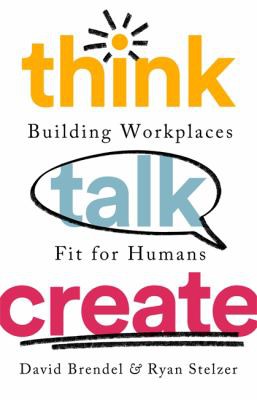
Think Talk Create: Taking HQ Into Organizations
The ideas behind the Human Quotient model — particularly the interpersonal dimension, and the central role of open inquiry in building high-performing environments — ultimately found their way into the book I co-authored with Ryan Stelzer: Think Talk Create: Building Workplaces Fit for Humans, published by PublicAffairs in 2021.
The book makes the case that authentic dialogue, guided by what we call Active Inquiry — a structured practice of open-ended, agenda-free questioning — is the foundation of every genuinely high-performing team and culture. It draws on neuroscience, philosophy, and organizational research to show why human connectedness drives innovation and financial performance, not just job satisfaction.
If the HQ model resonates with you, Think Talk Create is the natural next step: a practical guide to bringing these principles to life across your team or organization.
In My Own Words
I have written about the Human Quotient model and related ideas in the Huffington Post and Training Industry Magazine. These pieces go deeper on the research behind each dimension and offer practical guidance for leaders who want to apply the framework in their own work.
Huffington Post: Why Leadership Training Should Focus on the Human Quotient (HQ)
Huffington Post: How Leaders Can Promote Psychological Safety in the Workplace
Training Industry Magazine: The Human Quotient (HQ): A Model for Leadership Training
Frequently Asked Questions About the Human Quotient Model
IQ measures cognitive capacity, and EQ focuses primarily on emotional awareness and empathy. The Human Quotient is a broader and more actionable framework that integrates cognitive, behavioral, and interpersonal dimensions of leadership performance. Crucially, HQ is defined as proactive divided by reactive — it measures the degree to which a person leads with intention and deliberate choice rather than reflexive response. Unlike IQ, HQ is trainable and can be developed significantly through coaching.
In my experience, yes — with genuine motivation and disciplined effort. I have worked with clients across a wide range of industries, personality types, and career stages who have meaningfully increased their HQ through coaching. The cognitive, behavioral, and interpersonal dimensions each have specific, teachable components. What matters most is a willingness to engage in honest self-reflection and to practice new ways of thinking and responding, even when it feels uncomfortable at first.
HQ coaching typically begins with a thorough assessment of where a client currently sits across the three dimensions. We use structured interviews, behavioral feedback, and often 360-degree input from colleagues and direct reports. From there, we build a targeted developmental plan and work through it session by session — combining focused conversation, practical exercises, and ongoing reflection. I also draw on my background as a Harvard-trained psychiatrist and philosopher to address the deeper patterns that often underlie surface-level performance challenges.
HQ coaching is especially well-suited for high-achieving professionals who find that their technical skills and intelligence have taken them far, but something is limiting their next level of growth. Often that something lives in the behavioral or interpersonal dimensions — reactive tendencies under stress, communication patterns that erode trust, or difficulty building genuinely collaborative environments. Leaders navigating transitions, managing complex teams, or dealing with burnout also tend to benefit significantly from this framework.
Most clients begin to notice meaningful shifts within the first few months — in how they respond to stress, how they approach difficult conversations, and how their teams engage with them. A full HQ coaching engagement typically runs three to six months, with weekly or biweekly sessions. Some clients continue working together on an ongoing basis after the formal engagement concludes. The goal is always sustainable change, not short-term behavioral adjustment, so we build in reflection and reinforcement throughout.
Explore HQ Coaching With Dr. Brendel
If you would like to explore how the Human Quotient framework could help you — or your team — I would welcome a conversation. I typically offer a brief introductory call to discuss your goals and whether there is a good coaching fit. Sessions are available in person at my New York City or Boston office, or virtually via video conference.
The HQ model works in close partnership with the 4-M Wellness & Stress Management Model, which addresses the physical, mindfulness, and meaning-based foundations that make sustained high HQ possible.
Get In Touch
Contact Dr. Brendel for a consultation to assess whether his Executive and Career Coaching services are a good fit for you.
Think Talk Create
A brilliant counter-narrative for restoring humanity to the bottom-line, numbers-obsessed culture of the modern, 21st century workplace.